Blog: Wood Shake Roofing in North Texas: Is It Right for Your Home?
Is wood shake roofing a good choice for North Texas homes?
Wood shake roofing can be a beautiful, high-performing choice for North Texas homes — but it requires the right installation, the right materials, and real maintenance discipline. In a climate with hot summers, hail, and occasional ice storms, wood shake holds up well when it's properly installed and treated. The bigger question is whether your home, your HOA, and your lifestyle are a good match for it.
How does wood shake hold up against Texas hail and heat?
Quality wood shake — especially hand-split cedar — handles Texas heat better than many homeowners expect, because wood naturally insulates and breathes. Hail is the bigger concern: thick, heavy-grade shake resists impact better than thin or low-grade material, but no wood roof is completely immune to hail damage. Regular inspections after major storms are part of owning a wood shake roof in Grayson County or Collin County.
Do HOAs in North Texas allow wood shake roofing?
Many HOAs in communities around Sherman, McKinney, Van Alstyne, and Anna specifically require or encourage wood shake because of its classic, upscale appearance. Some newer developments, however, restrict it due to fire rating requirements. Always check your HOA's current architectural guidelines — and a good roofing contractor can help you read the fine print before you commit.
Below, we'll walk through the real pros and cons of wood shake for North Texas, what makes installation matter so much with this material, and how to decide if it's the right call for your home.
What makes wood shake roofing different from other roofing materials?
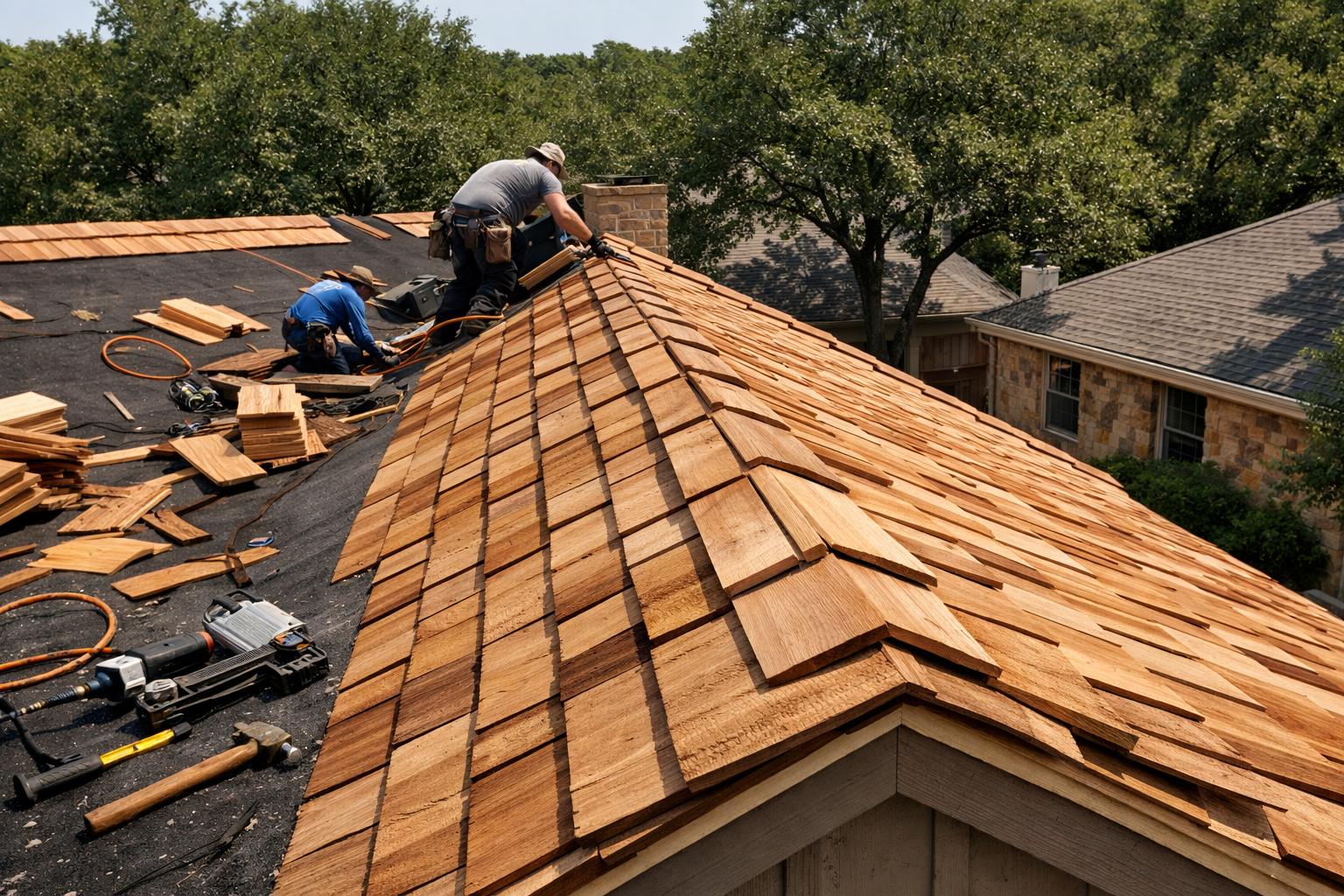
Wood shake shingles are split from real timber — most commonly western red cedar — rather than sawn smooth. That splitting process creates a rougher, thicker surface with a natural, rustic look that no asphalt shingle truly replicates. Hand-split shake is thicker and heavier than hand-split-and-resawn, which gives it better impact resistance and longevity.
The appeal in North Texas is partly aesthetic: wood shake has long been the go-to roofing material for high-end homes in established neighborhoods in Sherman, Denison, and communities throughout Grayson County. A cedar shake roof has a depth and character that adds genuine curb appeal and real resale value.
Beyond looks, wood is a natural insulator. A cedar shake roof creates a small air gap between the deck and the shingles that helps moderate attic temperatures — a real benefit during North Texas summers where attic heat can push well past 140°F. According to the U.S. Department of Energy, proper attic ventilation and insulating materials can meaningfully reduce cooling loads — and the air circulation built into a well-installed shake roof contributes to that.
Our Wood Shake Roofing page covers the materials and installation approach we use in more detail — it's worth a read if you're weighing your options.
The honest pros and cons of wood shake for North Texas
No roofing material is perfect for every home or every homeowner. Here's a straight look at what wood shake does well in this climate — and where it has real limitations.
Wood Shake vs. Asphalt Shingles in North Texas
| Factor | Wood Shake | Standard Asphalt Shingles |
|---|---|---|
| Lifespan | 25–40 years with maintenance | 15–25 years |
| Curb Appeal | Distinctive, high-end character | Standard appearance |
| Heat Performance | Natural insulation, breathes well | Absorbs more heat |
| Maintenance Required | Regular cleaning, periodic treatment | Minimal |
| Fire Rating | Class A when treated (required in most areas) | Class A standard |
| Storm/Hail Resistance | Good with heavy-grade shake | Varies by shingle grade |
| HOA Acceptance | Often required in upscale communities | Broadly accepted |
- Lifespan: Wood shake lasts 25–40 years with proper care — vs. 15–25 years for standard asphalt
- Curb appeal: Wood shake has a high-end, distinctive look — vs. the standard, flat appearance of asphalt
- Heat performance: Cedar naturally insulates and breathes — vs. asphalt which absorbs more heat
- Maintenance: Wood shake needs regular cleaning and treatment — vs. asphalt's minimal upkeep
- Fire rating: Treated shake achieves Class A — vs. asphalt which is Class A by default
- Hail resistance: Heavy-grade shake handles impact well — vs. asphalt performance depending on grade
- HOA fit: Often required in upscale communities — vs. asphalt being universally accepted
What does wood shake roofing actually require in terms of maintenance?
This is the part most homeowners underestimate. Wood shake is not a set-it-and-forget-it roof. In North Texas, moisture from spring rains, summer humidity, and fall storms can lead to algae, moss, and mildew growth if the roof isn't kept clean and properly ventilated.
A realistic maintenance plan for a wood shake roof includes:
- Annual cleaning to remove debris, moss, and algae buildup
- Periodic treatment with a wood preservative or fire retardant (every 5–7 years is common)
- Prompt replacement of any cracked or split shingles before moisture gets under the deck
- Professional inspection after major hailstorms — this is especially important in Grayson County and Fannin County where storm seasons can be rough
If you're willing to do that maintenance — or hire it out — a wood shake roof can serve you well for decades. If you want something more hands-off, it's worth looking at impact-resistant asphalt shingles or Metal Roofing as alternatives.
Does fire rating matter for wood shake in Texas?
Yes — and this is a detail that matters both for insurance and for local codes. Untreated cedar shake carries a Class C fire rating. Treated shake, applied with a factory or field-applied fire retardant, can achieve a Class A fire rating — the same as asphalt and metal.
Many insurers in Texas require Class A fire-rated roofing, and some municipalities do too. The Texas Department of Insurance provides guidance on wind and fire rating standards that affect both coverage and premiums. Before you choose wood shake, confirm with your insurance carrier what rating they require — and make sure the contractor you hire installs material that meets it.
At Whitetail Roofing Co., Greg and Bryant Threadgill make sure every wood shake installation uses premium, properly rated materials. We don't take shortcuts on material specs, and we'll tell you plainly what your options are before work ever begins.
Is installation quality really that different with wood shake?
Yes — more than with almost any other roofing material. Wood shake requires precise spacing between shingles to allow for the natural expansion and contraction of wood. Too tight, and you trap moisture. Too loose, and you create wind vulnerability. The underlayment system matters, the ventilation matters, and the fastener type matters.
A crew that mostly installs asphalt shingles may not have the hands-on experience to do a wood shake roof correctly. That's where real specialty knowledge pays off. Our team has installed wood shake roofs across Whitewright, Sherman, Denison, Tom Bean, Bonham, and Leonard — we know how the North Texas climate behaves and we install accordingly.
Every job includes a thorough final inspection and complete cleanup. Nails, debris, old shingles — all of it is gone before we leave your property. That's part of every job, not an add-on.
If you're comparing contractors, our guide to what you need to know before a roof replacement walks through the key questions to ask any roofer before signing a contract.
Is Wood Shake Right for You? A Quick Checklist
- ✅ You want a distinctive, upscale look that stands out in your neighborhood
- ✅ Your HOA requires or strongly prefers wood shake
- ✅ You're planning to stay in the home long enough to benefit from a 30+ year lifespan
- ✅ You're comfortable with annual maintenance or budgeting for it
- ✅ You want natural insulating performance to help with North Texas summer heat
- ❌ You want a completely low-maintenance roof
- ❌ Your insurer won't cover anything below Class A without a significant premium increase
- ❌ You're in a wildfire-risk area where untreated wood is prohibited
If most of the green boxes describe you, wood shake is worth a serious look. If the red boxes give you pause, we're happy to walk through alternatives — asphalt shingles or a standing seam metal roof might be a better fit, and we'll tell you that honestly. That's how we've built a 5.0 rating across 28 Google reviews: straight answers, no pressure.
Explore all the roofing services we offer as a licensed Roofing Contractor serving Grayson, Collin, and Fannin Counties.
Frequently Asked Questions
How long does a wood shake roof last in North Texas?
A properly installed and maintained wood shake roof in North Texas typically lasts 25 to 40 years. The lifespan depends on the grade of shake used, the quality of installation, and how consistently the roof is cleaned and treated. Heavy-grade, hand-split cedar shake tends to last longer than thinner, machine-cut options, especially in a climate with significant hail and storm exposure.
Will my insurance cover a wood shake roof in Texas?
Most Texas homeowners' insurers will cover wood shake roofing, but they may require that it carry a Class A fire rating — which means the shake must be factory-treated or field-treated with a fire retardant. It's smart to call your insurance carrier before you commit to a material. Some insurers offer better rates on treated shake than untreated. Whitetail Roofing Co. can tell you exactly what rating the materials we use carry.
Is wood shake harder to install than asphalt shingles?
Yes — wood shake installation requires more precision and experience than standard asphalt shingle work. The shingles must be spaced correctly for expansion and contraction, the underlayment and ventilation need to be matched to wood's breathable nature, and fastener selection matters. A crew without specific wood shake experience can make mistakes that shorten the roof's life significantly. Always ask a contractor about their hands-on experience with this material specifically.
Can wood shake roofing handle Texas hailstorms?
Heavy-grade cedar shake handles hail better than many homeowners expect — thick, hand-split shake has natural impact resistance. However, large hail (1.5 inches or larger) can still cause damage, and a professional inspection after a major storm is important. If you have a wood shake roof and experience a significant hailstorm in Grayson County or surrounding areas, Whitetail Roofing Co. offers free storm damage assessments and can help you through the insurance claim process.
How does wood shake compare to metal roofing for North Texas homes?
Wood shake and standing seam metal roofing are both premium, long-lasting options — but they serve different goals. Metal roofing is nearly maintenance-free, extremely hail-resistant, and ideal for homeowners who want maximum durability with minimal upkeep. Wood shake delivers superior aesthetics and natural insulation but requires ongoing maintenance. If your HOA requires wood shake or you love the look, wood is the right choice. If low maintenance is your top priority, metal is hard to beat. We install both and can walk you through the tradeoffs honestly.
Ready to find out if wood shake is right for your home? Call Whitetail Roofing Co. at 903-821-1163 (Mon–Sat, 8:00am–5:00pm) for a free inspection and a clear written estimate — no surprises, no pressure. Greg and Bryant Threadgill will give you a straight answer and let you decide what's best for your home.
Whitetail Roofing Co.
Family-owned roofing contractor serving Whitewright, TX and North Texas for 30+ years.