
Blog: Storm Damage Roof Repair: What Grayson County Homeowners Should Know
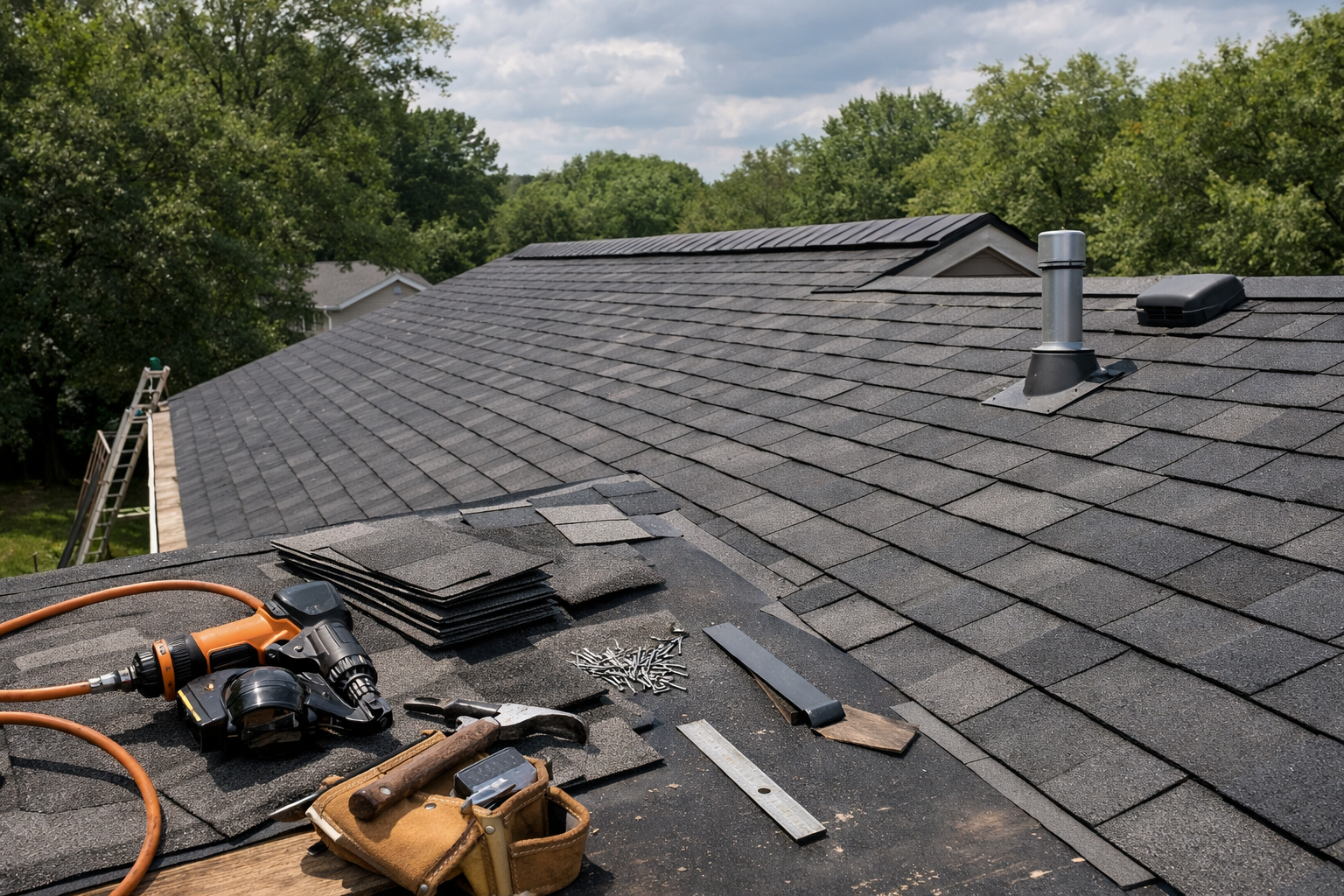
How do I know if my roof has storm damage after a hail or wind event in Grayson County?
After a hail or wind storm in Grayson County, look for dented or cracked shingles, missing granules (the gritty coating on asphalt shingles), bent or torn flashing around chimneys and vents, and sagging gutters. Inside, water stains on ceilings or attic insulation are a red flag. If you see any of these signs, get a professional inspection before filing a claim.
Will my homeowner's insurance cover storm damage roof repair in Grayson County, TX?
Most standard homeowner's insurance policies in Texas cover roof damage caused by hail, wind, and storm events. Coverage depends on your policy's terms, your deductible, and how quickly you report the damage. Texas law gives homeowners two years from the date of a storm to file a claim, but waiting too long can make documentation harder and give insurers room to dispute the damage.
How long does a storm damage roof repair or replacement take in Grayson County?
Once your insurance claim is approved and materials are ordered, most roof replacements in Grayson County take one to three days to complete, depending on the size and pitch of the roof and the materials used. The insurance process itself — inspection, adjuster visit, approval — typically runs two to four weeks. Working with a local roofing contractor who handles claims daily speeds everything up.
North Texas storms don't give much warning. A line of hail can roll through Sherman, Denison, or Van Alstyne on a Tuesday afternoon and leave hundreds of roofs quietly damaged — damage you might not notice until water shows up inside your home six months later. This guide walks Grayson County homeowners through exactly what to look for after a storm, how the insurance claim process works, and how to make sure the repair or replacement gets done right the first time.
If your roof is damaged and you wait, the problem gets more expensive. A small leak ignored through one more Texas summer will rot decking, invite mold, and turn a straightforward insurance claim into a much bigger headache.
Quick Action Checklist: After a Grayson County Storm
- Do a safe walk-around your property — don't get on the roof yourself
- Check gutters and downspouts for heavy granule buildup (sign of shingle damage)
- Look for dented AC units, window screens, or wood fence rails — hail that dents those hit your roof too
- Photograph any visible damage before anything is disturbed
- Check your attic for daylight, water stains, or wet insulation
- Call a licensed local roofer for a free inspection before you call your insurance company
- Pull out your homeowner's policy and find your deductible and coverage details
- Document the storm — date, weather reports, any NOAA hail records for your area
Get a roofer on your roof before the adjuster comes. A trained eye documents damage the way an adjuster will look for it — and that documentation protects your claim. At Whitetail Roofing Co., Greg and Bryant Threadgill offer free storm inspections across Grayson County, Collin County, and Fannin County with no obligation and no pressure.
What does hail damage actually look like on an asphalt shingle roof?
Hail damage on asphalt shingles isn't always obvious from the ground. Up close, you're looking for circular impact marks — soft spots where hail knocked the granule coating loose and exposed the darker asphalt mat underneath. These spots feel spongy when you press them. Over time, those bare spots dry out, crack, and let water in.
Larger hailstones — anything above about an inch in diameter — can crack shingles outright or bruise the mat so badly the shingle fails within a year or two even without a visible hole. The Insurance Information Institute notes that hail causes billions in property damage across the U.S. every year, and Texas consistently ranks among the hardest-hit states.
Here's what to look for, surface by surface:
- Shingles: circular dents, bare dark spots, cracked tabs, or missing granules in consistent patterns
- Ridge cap: hail hits the high points hardest — check for splits and exposed mat along the ridge line
- Gutters and downspouts: dents, dings, and granule buildup inside the gutter trough
- Flashing: dented or bent metal around chimneys, skylights, and vents
- Fascia and soffit: dents or punctures in painted wood or aluminum
- A/C condenser: dented fins are a reliable indicator that hail was large enough to damage your roof
If you have a wood shake roofing system, hail damage looks different — splits along the grain of the shake, sharp-edged impact marks, or cracks running across the face of the shingle. Wood shake is more forgiving in some ways because it's thicker, but damage is still serious and worth inspecting after any significant storm.
Wind damage: what Grayson County homeowners often miss
Wind damage is sneakier than hail damage. A strong gust doesn't always rip off a whole section of shingles — it often lifts them just enough to break the adhesive seal strip underneath, then lays them back down flat. The shingle looks fine from the street. But that broken seal means water can now work its way under the tab every time it rains.
Missing shingles are the obvious sign. But also watch for:
- Shingles with raised edges or corners that won't lay flat
- Debris — tree limbs, branches, blown gravel — on the roof surface
- Damage concentrated on one slope (the windward side)
- Flashing that's pulled away from walls or chimney bases
- Granule deposits in unusual locations after a storm
North Texas sees strong thunderstorm winds regularly — straight-line winds from severe storms can hit 60 to 80 mph in Grayson County without producing a tornado. That's enough to unseal and damage shingles on any roof more than 10 to 15 years old. If your roof took a hit like that, it's worth a look from someone who knows what they're checking.
How does the roof insurance claim process work in Texas?
The insurance claim process has a clear sequence, and knowing it puts you in a stronger position. Here's how it typically goes for Grayson County homeowners:
- Get a professional inspection first. Before you call your insurance company, have a licensed roofing contractor inspect your roof and document the damage. This gives you a clear picture of what's there before the adjuster arrives.
- File your claim promptly. Call your insurance company or file online. Give them the storm date and describe the damage. They'll assign a claims adjuster and schedule a visit.
- Meet the adjuster at your property. Your roofer can and should be present during the adjuster's visit. A good contractor walks the adjuster through every item of damage so nothing gets missed or undercounted.
- Review the adjuster's estimate. Your insurance company will send an estimate (called a loss summary or scope of damage report). Compare it carefully to your roofer's findings. If items are missing, a licensed contractor can submit a supplemental claim.
- Choose your contractor and sign a contract. Once your claim is approved, select your contractor, review a written estimate, choose your materials, and get on the schedule.
- Work gets completed. Your contractor installs the new roof. Any legitimate additional damage found during tear-off gets documented and submitted to the insurance company as a supplement.
- Final payment and closeout. Insurance pays the contractor directly or issues payment to you minus your deductible. Your deductible is your responsibility — no legitimate contractor "waives" it. That's insurance fraud in Texas.
Whitetail Roofing Co. has walked Grayson County homeowners through this process more times than we can count. We handle the documentation, stay in communication with your adjuster, and make sure you get a fair settlement. Learn more on our storm damage and insurance claims page.
Working With a Local Contractor vs. Handling the Claim Alone
| Step | With a Local Contractor Who Knows Claims | Handling It Alone |
|---|---|---|
| Damage Documentation | Full written report with photos before the adjuster arrives | Whatever photos you took from the ground |
| Adjuster Meeting | Contractor present to walk the adjuster through every item | Adjuster sets the scope alone; you may not know what's missing |
| Missed Items | Supplemental claim filed with documentation | Likely left on the table |
| Material Quality | You choose the product; contractor recommends what holds up locally | You may accept whatever the lowest-bid roofer proposes |
| Timeline | Faster — contractor tracks claim status and pushes for approval | Claims can drag for months without follow-up |
- Documentation: full written report with photos before the adjuster arrives — vs. photos you took from the ground
- Adjuster meeting: contractor present to walk every item — vs. adjuster sets scope alone
- Missed items: supplemental claim filed with documentation — vs. left on the table
- Material quality: you choose, contractor advises — vs. lowest-bid roofer decides
- Timeline: faster with active follow-up — vs. claims can drag for months
What should I look for in a roofing contractor after a Grayson County storm?
After a major storm, out-of-town contractors show up fast. They drive through neighborhoods, knock on doors, and offer to inspect your roof on the spot. Some do good work. Many are gone before the first rain falls on their repair. In Grayson County, that's a real pattern after any significant hail event.
Here's what actually matters when you're choosing who fixes your roof:
- Licensed and insured in Texas — ask for their license number and verify it. Every crew member should be covered, not just the owner.
- Local address and phone number — a company based in Whitewright or nearby can be held accountable. A company with a temporary local address cannot.
- Written estimate before any work starts — no legitimate roofer asks you to sign a blank contract or an "assignment of benefits" form without a clear scope of work.
- References and reviews you can verify — look at Google reviews, check dates, read what customers actually say.
- Experience with insurance claims specifically — navigating the claims process is a skill. Not every roofer has it.
Whitetail Roofing Co. is family-owned and based right here in Whitewright. Greg and Bryant Threadgill have been doing this work in North Texas for over 25 years. They carry a 5.0 rating from 28 verified Google reviews, and every job uses trained, licensed, and insured crews. When they say they'll be there, they're there.
If you're evaluating a roofing contractor in the Grayson County area, take a few minutes to verify their license, read real reviews, and get a written estimate before signing anything.
What roofing materials hold up best in North Texas weather?
Grayson County weather puts roofs through a lot. Summer heat pushes attic temperatures well above 130°F. Hailstorms cycle through spring and fall. Wind events hit without warning. The material you choose after a storm replacement matters for how long that roof holds up through the next decade of North Texas weather.
Asphalt shingles are the most common choice and the right one for most homes in the area. Look for architectural (laminate) shingles with a Class 4 impact resistance rating — that's the highest available and will hold up better against future hail. Roofing Contractor Magazine notes that Class 4 rated shingles can also qualify homeowners for insurance discounts in Texas.
Standing seam metal roofing is an excellent long-term option for homeowners who want to reduce future claims. Metal is hail-resistant, sheds water fast, and lasts 40 to 70 years with minimal maintenance. If you've had two or three claims in a decade, moving to metal often makes financial sense — and it adds real value to your home.
Wood shake is a premium option that looks exceptional on certain homes. It does require more maintenance than asphalt and is susceptible to moisture and insects if not properly treated. If your home had wood shake before the storm, a replacement in kind is often the right call — but it needs to be done by someone who actually knows wood shake roofing, not someone who installs it twice a year.
For new roof installation or full roof replacement after storm damage, Whitetail uses premium materials from trusted manufacturers. They don't take shortcuts on underlayment, flashing, or ridge ventilation — the components that determine how long a roof actually lasts.
How does Grayson County's storm history affect my claim?
Grayson County sits in one of the more active hail corridors in Texas. The area between Sherman, Denison, and McKinney sees multiple significant hail events most years, with some seasons producing storms that generate widespread insurance claims across the county.
When a large storm hits, insurance companies receive hundreds of claims from the same area at once. That volume means adjusters are often rushed, undercounting damage or missing secondary items — interior damage, attic insulation, ventilation components — that are legitimately part of the loss. A roofing contractor who documents thoroughly and stays present during the adjuster visit is your best protection against an underpaid claim.
NOAA maintains historical storm data by county that can help establish the date and intensity of a specific storm if your records are incomplete. That documentation can be critical when an insurer challenges whether damage is storm-related or pre-existing.
For homeowners in Tom Bean, Bells, Leonard, Bonham, or other smaller Grayson and Fannin County communities — the same process applies. The storm doesn't know what county line it crossed. If you saw hail or had damage, get an inspection. If damage is there, you have a legitimate claim worth pursuing.
Before your next roof replacement — whether it's storm-related or not — it's also worth reading up on what to expect from the broader project. Our post on what to know before a roof replacement walks through the full process from inspection to final walkthrough.
What happens during a Whitetail Roofing storm inspection?
A storm inspection from Whitetail Roofing Co. starts with a conversation, not a sales pitch. Greg or Bryant walks you through what they're going to look at, gets on the roof to check every surface, and comes back down with real findings — photos, written notes, and a clear explanation of what they found.
If there's damage worth filing a claim on, they'll tell you. If the roof is in good shape and a claim isn't warranted, they'll tell you that too. Honest communication isn't a slogan for them — it's how they've built their reputation in Grayson County over more than 25 years.
The inspection covers:
- Every slope of the roof — not just the street-facing side
- Ridge caps, valleys, and hip areas
- All penetrations — chimneys, vents, skylights, pipes
- Gutters, fascia, and soffit
- Flashing at every transition point
- Interior attic check when access is available
After the inspection, you'll have a written estimate and a clear picture of your options — before any work begins and before you've signed anything. That's the standard every homeowner should expect. Once the roof is complete, Whitetail does a final walkthrough and cleanup — nails and debris removed from your yard and driveway — so the job is genuinely finished when they leave.
Frequently Asked Questions
How soon after a storm should I get my roof inspected in Grayson County?
Get your roof inspected as soon as it's safe to do so — ideally within a week or two of the storm. Texas gives homeowners two years to file a hail or wind damage claim, but waiting creates problems. Damage can worsen quickly through rain cycles, and insurers may argue that later deterioration is unrelated to the original storm event. Early documentation protects your claim and stops minor damage from becoming a major repair.
Can I file a roof insurance claim without a roofing contractor's help?
You can, but you're at a real disadvantage. Insurance adjusters work for the insurance company, not for you. A licensed local roofing contractor who understands how claims are scoped and documented can identify damage that adjusters miss, be present during the adjuster's visit, and file supplemental claims if items are left out. Having a contractor involved from the start typically results in a more complete claim with fewer disputes and faster resolution.
What if the insurance adjuster finds less damage than my roofer documented?
This happens regularly, especially after large storms when adjusters are working through a high volume of claims. Your roofer can submit a supplemental claim with additional documentation — photos, measurements, and written assessments — to challenge the adjuster's scope. In cases where the gap is significant, a public adjuster may be worth consulting. Don't accept an estimate that feels incomplete without pushing back first. A good contractor will go to bat for you.
Does my deductible apply to storm damage roof repairs?
Yes. Your homeowner's insurance deductible applies to storm damage claims just like any other claim. In Texas, many policies carry a separate wind and hail deductible — sometimes expressed as a percentage of your home's insured value rather than a flat dollar amount. Review your policy before filing so the number doesn't catch you off guard. Any contractor who offers to "waive" your deductible is committing insurance fraud, which is illegal under Texas law.
Is it worth replacing the whole roof if only part of it was damaged by a storm?
Sometimes a partial repair is the right call — but not always. If the undamaged sections are aging, if matching current shingles to older ones proves difficult, or if your insurance settlement covers a full replacement based on the extent of the damage, a full replacement often makes more sense long-term. A licensed contractor should walk you through both options honestly. Whitetail Roofing will give you the real picture so you can make the decision that fits your home and your situation.
If you've had a storm roll through your part of Grayson County — or you're not sure whether damage is there — the best next step is a free inspection from a contractor who knows the area. Whitetail Roofing Co. serves homeowners across Sherman, Denison, Van Alstyne, Anna, Howe, Tom Bean, Bells, Trenton, Bonham, Leonard, and all of Grayson, Collin, and Fannin Counties. Call Greg and Bryant Threadgill at 903-821-1163 — Monday through Saturday, 8:00am to 5:00pm — or visit whitetailroofing.com to schedule your free storm inspection. No pressure, no obligation — just straight answers about what's on your roof and what it needs.
Whitetail Roofing Co.
Family-owned roofing contractor serving Whitewright, TX and North Texas for 30+ years.